Does open source technologies kill innovation? NO
After researching this topic I have the knowledge about
open sources technologies. Open sources technologies does not kill but in fact it aids it.
 Generically, open source refers to a program in which the
source code is available to the general public for use and/or
modification from its original design free of charge,
Open source code is typically created as a collaborative effort in
which programmers improve upon the code and share the changes within the
community. Open source sprouted in the technological community as a
response to proprietary software owned by corporations.
Generically, open source refers to a program in which the
source code is available to the general public for use and/or
modification from its original design free of charge,
Open source code is typically created as a collaborative effort in
which programmers improve upon the code and share the changes within the
community. Open source sprouted in the technological community as a
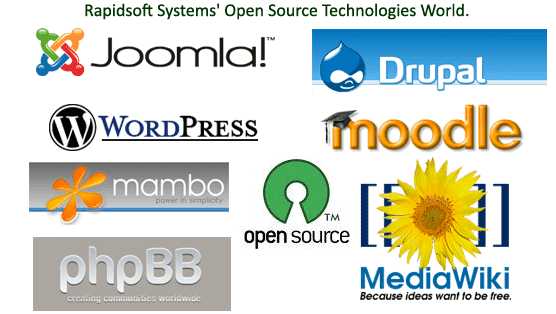
response to proprietary software owned by corporations. The graphic show some well known open source companies.

Firefox (favorite browser by many ) currently accounts for 24.43% of the recorded usage share of web browsers, but this figure is on the rise. Already the browser of choice for most web professionals, Firefox’s popularity is growing thanks to its vast selection of third party add-ons, which let users tailor their browsing environment down to the finest detail.
Open source technologies give developers the platform to express their creative mind on. It also eliminate the tedious process off filling patents which can stumble growth. Developers are more focus on their product when using open source technologies due to the fact that they wont infringe on someone else patent/s.
Organizational benefits from the use of Open Source Software
- Reliability
- Stability
- Auditability
- Cost
- Flexibility and Freedom
- Support and Accountability
Opens sources eliminate patent trolls. These persons causes a ponderous effect on development of technology.
Companies will have long and heated court battles over infringement.
Google was one of the last hold-outs in the patent arms race. Despite the utility of its early patent on PageRank and hundreds of search-related patents, Google was slow to file patents outside its core business, which has put its entire Android initiative at risk. As of this summer there were already 45 patent lawsuits involving Android and Android devices — some of which have resulted in injunctions against the shipment of Android products in some markets — like the Samsung Galaxy Tab in Australia.

Google was hoping to arm itself with 6,000 Nortel patents, for which it bid $3.14159 billion. Humorous as the bid amount was, the patent wars reached a new level when the portfolio was purchased for $4.5 billion — more than Nortel itself was worth – by a consortium led by Apple and Microsoft. Google, late to the party and feeling spurned by Microsoft, then acquired Motorola Mobility, including its array of 17,000 patents, for $12 billion. Google also spent another $1 billion for rights to 1,000 IBM patents covering a wide array of computing technologies.
Companies will have long and heated court battles over infringement.
Google was one of the last hold-outs in the patent arms race. Despite the utility of its early patent on PageRank and hundreds of search-related patents, Google was slow to file patents outside its core business, which has put its entire Android initiative at risk. As of this summer there were already 45 patent lawsuits involving Android and Android devices — some of which have resulted in injunctions against the shipment of Android products in some markets — like the Samsung Galaxy Tab in Australia.

Google was hoping to arm itself with 6,000 Nortel patents, for which it bid $3.14159 billion. Humorous as the bid amount was, the patent wars reached a new level when the portfolio was purchased for $4.5 billion — more than Nortel itself was worth – by a consortium led by Apple and Microsoft. Google, late to the party and feeling spurned by Microsoft, then acquired Motorola Mobility, including its array of 17,000 patents, for $12 billion. Google also spent another $1 billion for rights to 1,000 IBM patents covering a wide array of computing technologies.
SO DO YOU AGREE?
